EPR Registration for Plastic Waste Management in India Complete Guide 2026
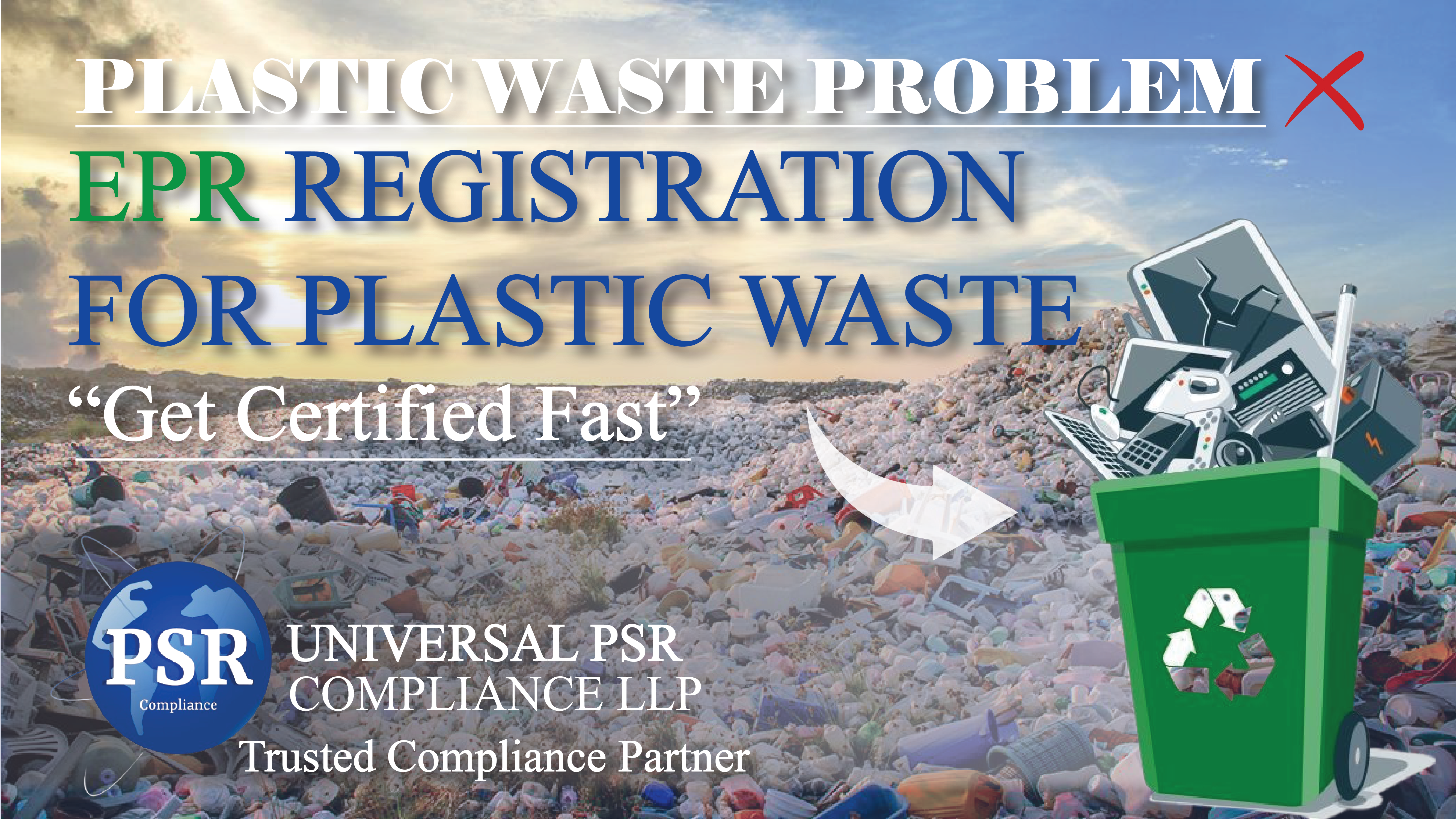
Plastic waste management has become a major environmental concern in India. To control plastic pollution and promote recycling, the Government of India has made strict rules under the Central Pollution Control Board (CPCB).
One of the most important compliance systems is EPR Registration for Plastic Waste Management, which is mandatory for producers, importers, and brand owners dealing with plastic packaging.
This guide explains everything in a simple and updated way.
What is EPR Registration?
EPR (Extended Producer Responsibility) means that companies producing or using plastic packaging are responsible for managing the waste generated from their products after use.
In simple words:
👉 If you produce or sell plastic packaging, you are responsible for its recycling or disposal.
This rule applies to:
Manufacturers
Importers
Brand owners (PIBOs)
Who Needs EPR Registration?
EPR registration is mandatory for all PIBOs (Producers, Importers, Brand Owners) who use plastic packaging in India.
You must register if you:
Manufacture plastic products
Import packaged goods
Sell branded products using plastic packaging
Operate in one or multiple states in India
Categories of Plastic Covered Under EPR
EPR applies to different types of plastic packaging:
Rigid plastic packaging
Flexible plastic packaging (single or multi-layer)
Multi-layered plastic packaging
Compostable plastic packaging
EPR Registration Process (Step-by-Step)
1. Online Registration
Apply through the centralized EPR portal of CPCB.
2. Document Submission
Upload all required business and compliance documents.
3. Action Plan Submission
Submit your plastic waste management plan.
4. Verification
Authorities verify your details and compliance plan.
5. Certificate Issuance
Once approved, you receive your EPR registration certificate.
Documents Required for EPR Registration
PAN & GST certificate
Company incorporation certificate
IEC code (for importers)
Authorized signatory ID proof
Plant details (if applicable)
Process flow diagram (for manufacturers)
EPR Fees Structure
The fees depend on waste generation:
Small units: ₹10,000 approx
Medium units: ₹20,000 approx
Large units: ₹50,000 approx
Renewal fees are usually similar to registration fees.
Latest Rules on Plastic Waste (2026 Update)
Under updated rules of the Ministry of Environment, Forest and Climate Change:
Certain single-use plastic items are banned
Strict recycling targets are mandatory
Companies must meet annual EPR obligations
Plastic credit system is introduced
Responsibilities of PIBOs
After registration, PIBOs must:
Collect and recycle plastic waste
Submit annual returns
Meet recycling targets
Work with authorized recyclers
Maintain compliance reports
Failure to comply can result in penalties or environmental compensation.
Benefits of EPR Registration
Legal compliance in India
Avoid heavy penalties
Better brand reputation
Contribution to environmental protection
Easier business expansion
Common Mistakes to Avoid
Incorrect documentation
Not meeting recycling targets
Missing annual returns
Applying under wrong category
How PSR Compliance Can Help You
Getting EPR registration can be complex. PSR Compliance helps you with:
End-to-end EPR registration
Documentation & filing support
CPCB portal handling
Fast approval process
Annual compliance assistance
Conclusion
EPR Registration for Plastic Waste Management is not just a legal requirement but also a responsibility towards a cleaner environment. Every PIBO must comply with CPCB guidelines to continue business smoothly in India.
With proper guidance and documentation, the process becomes simple and hassle-free.
Contact Us
📞 Phone:+91 7065883416
📧 Email:[support@psrcompliance.com]
🌐 Website:https://www.psrcompliance.com/
📍 Office Address: [D -49 , D block, Sector 6 , Noida , Uttar Pradesh, 201301]